







































 Moissanite
 Moss Agate
 Emerald
 Sapphire
 Amethyst
 Black Onyx
 Opal
Opal Alexandrite
 Topaz
Topaz Solitaire
 Halo
Halo
 Cluster
 Side Stone
 Pavé
Pavé
 Split Shank
 Art Nouveau
 Aquamarine
 Blue Sandstone
 Moonstone
 Black Rutilated Quartz
 Lab Diamond
 Ruby
Ruby
 Teal Sapphire
 Salt & Pepper Diamond
 Morganite
 Peridot
 Garnet – January
 Tanzanite – December


Have you ever noticed tiny numbers like 585 or 750 stamped on your gold jewelry and wondered what they mean? These numbers aren’t just random markings-they’re the key to understanding the purity and value of your gold pieces. Simply put, they indicate the purity of the gold, with 585 representing 14K gold and 750 representing 18K gold. Understanding these markings is essential for anyone who wants to buy, sell, or simply appreciate fine jewelry. In this article, we’ll explore the meaning behind 585 and 750, compare their differences, and help you decide which type of gold is best for your needs.
Understanding Gold Purity
Gold purity refers to the amount of pure gold in jewelry or other gold items. It’s essentially a measure of how much of the item is gold versus other metals mixed in. Pure gold, also known as 24-karat (24K) gold, is too soft for everyday use. That’s why it’s often mixed with other metals such as silver, copper, or zinc to increase its strength and durability.
Gold purity is measured using the karat system and the percentage system. The karat system, which is commonly used in the United States and other countries, divides gold into 24 parts. For example, 24K gold is 100% pure, while 18K gold is 18 parts gold and 6 parts other metals (75% gold). The percentage system is used in many parts of the world, and gold purity is expressed as a percentage. For example, 585 gold means the piece contains 58.5% pure gold, while 750 gold contains 75% pure gold.
Common Gold Purity Levels
Here are common gold purities and their meanings:
- 24K gold (100% pure): The purest form of gold, but too soft for most jewelry.
- 18K gold (750 or 75% pure): A popular choice for high-end jewelry, offering a balance of purity and durability.
- 14K gold (585 or 58.5% pure): The most common purity for everyday jewelry, known for its strength and affordability.
- 10K gold (417 or 41.7% pure): The minimum karat that can legally be called “gold” in many countries, is often used for budget-friendly pieces.
What Does 585 Mean on Jewelry?
The number 585 is a hallmark that indicates the purity of the gold used in a piece of jewelry. Specifically, it means that the piece is 58.5% pure gold. The remaining 41.5% is made up of other metals such as silver, copper, or zinc. These alloys increase the durability and change the color of the gold.
In the karat system, 585 gold is equivalent to 14-karat (14K) gold because 14 out of 24 parts are pure gold. 14k gold is one of the most popular purity levels for jewelry. It strikes a balance between gold content, durability, and affordability.

Pros and Cons of 585 Gold
Pros:
- Durability: 585 gold (14K) is significantly more durable than pure gold (24K). Adding other metals makes it much more resistant to scratching, denting, and bending. This makes it suitable for everyday wear.
- Affordability: Compared to higher karat gold such as 18k or 22k, 14k gold is more affordable.
- Versatility: 14K gold is versatile and can be used in various jewelry designs and colors. Colors include yellow, white, and rose gold, offering a range of aesthetic options.
- Less Maintenance: 14K gold is less prone to tarnishing than pure gold, meaning it requires less frequent cleaning and maintenance.
Cons:
- Lower Gold Content: 14K gold has a lower gold content (58.5%) compared to 18K or 24K gold.
- Less Soft and Luxurious: The added metals make 585 gold more durable, but less soft and malleable than higher-purity gold.
- Resale Value: Resale value may be lower than higher karat gold, which can be a disadvantage if you plan to sell or trade your jewelry in the future.
What Does 750 Mean on Jewelry?
The number 750 is a hallmark that indicates the purity of the gold used in a piece of jewelry. Specifically, it means that the piece is made of 75% pure gold. The remaining 25% is made up of other metals, which may include alloys such as copper, silver, or palladium.
In the karat system, 750 gold is equivalent to 18 karat (18K) gold, meaning that 18 out of 24 parts are pure gold. This level of purity is highly valued for its balance of gold content, durability, and aesthetics.
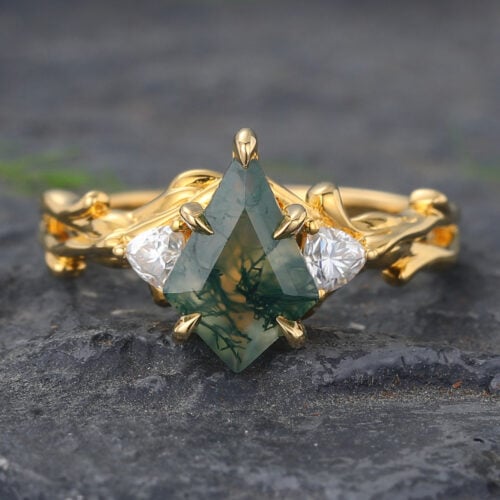
Pros and Cons of 750 Gold
Pros:
- Higher Gold Content: 18k gold has a higher percentage of pure gold (75%) compared to 14k (58.5%) or 10k (41.7%) gold. This gives it a richer, more vibrant yellow color that many prefer.
- Aesthetic Appeal: The higher gold content contributes to a more luxurious and visually appealing appearance.
- Good Balance of Durability and Purity: While not as durable as 14k, 18k gold strikes a good balance between purity and durability. It’s still strong enough for everyday wear.
- Resale Value: Due to its higher gold content, 18k gold generally has a higher resale value than 14k or 10k gold.
- Less Prone to Tarnishing: While all gold alloys can tarnish to some degree, 18k gold, with its higher gold content, is less prone to tarnishing than lower-karat options.
Cons:
- More Expensive: 18k gold is more expensive than 14k or 10k gold because it contains more pure gold. This higher cost can be a significant factor for budget-conscious buyers.
- Softness: Although durable, 18K gold is softer than 14K gold. This means it’s more susceptible to scratches, dents, and bending.
- Weight: The higher gold content can make 750 gold jewelry heavier, which may not be comfortable for everyone.
What is the Difference between 585 Gold and 750 Gold?
- Gold Purity: 585 gold contains 58.5% gold, classified as 14K gold. 750 Gold contains 75% gold, classified as 18K gold.
- Durability: 585 gold jewelry is very durable, and highly resistant to scratches and dents, while 750 gold jewelry is softer than 585 gold and more susceptible to scratches and dents.
- Color and Appearance: 585 gold has a lighter, less intense yellow gold color, while 750 gold has a richer, more intense yellow gold color.
- Price and Cost: 750 gold (18k) is more expensive than 585 gold (14k). This is because 18k gold has a higher percentage of pure gold (75%) compared to 14k gold (58.5%). Pure gold is the most valuable component, so naturally more pure gold means a higher price.
- Value and Investment: 750 gold generally has a higher resale value than 585 gold and is better for investment, while 585 gold is more practical for everyday use.
- Common Uses: Because of its durability and affordability, 585 gold is often used for everyday jewelry such as wedding bands, engagement rings, bracelets, and necklaces. 750 gold is often used for special occasion jewelry, such as high-end engagement rings, luxury watches, and fine necklaces or earrings.
Other Common Jewelry Markings
While 585 and 750 are common for gold, jewelry can have a variety of other markings that provide valuable information. Here are some of the most common:
Gold Markings
- 10K: 41.7% gold
- 14K: 58.5% gold
- 18K: 75% gold
- 22K: 91.7% gold
- 24K: 99.9% pure gold
Silver Markings
- 925: Sterling silver (92.5% silver)
- 800: 80% silver
- 950: 95% silver
Platinum Markings
- 950: 95% Platinum
- 900: 90% platinum
Palladium Markings
- 950: 95% Palladium
- 500: 50% palladium
Other Markings
- Rhodium-Plated: Indicates a thin layer of rhodium has been applied for a shiny, reflective finish.
- Vermeil: Indicates gold-plated silver, typically 10K gold or higher over sterling silver.
- Cubic Zirconia (CZ): Often labeled “CZ” to indicate synthetic stones.
- Swarovski: May be marked with the Swarovski logo to indicate genuine crystal.
How to Choose Between 585 and 750 Jewelry?
Choosing between 585 (14k) and 750 (18k) gold jewelry depends on your priorities and lifestyle. Here’s a simple guide to making the decision:
Choose 585 gold if:
- You’re on a budget.
- You need durable jewelry for everyday wear.
- You’re not overly concerned with the intensity of the gold color.
Choose 750 gold if:
- You prefer a rich, yellow-gold color.
- You’re willing to pay more for higher gold content.
- You wear jewelry primarily for special occasions or are less concerned about scratches and dents.
How to Care for 585 and 750 Jewelry?
General Care:
- Store separately: Prevent scratches by storing each piece individually in a soft pouch or jewelry box.
- Remove before activities: Remove jewelry before exercising, swimming, showering, cleaning, or applying lotions, perfumes, or hairsprays.
- Gentle cleaning: Use warm water, mild soap, and a soft brush to clean your jewelry. Dry with a soft cloth.
For 585 gold (14k):
- Durability: 14k is quite durable, but still avoids harsh chemicals and rough handling.
- Tarnish: Less prone to tarnishing, but occasional cleaning will help maintain luster.
For 750 gold (18k):
- Softer: 18k is softer, so take extra care to avoid scratches and dents.
- Higher maintenance: Due to its higher gold content, it may require more frequent cleaning to maintain its luster.
Both 585 and 750:
- Professional cleaning: Consider a professional cleaning once a year for a thorough refresh.
- Inspection: Check regularly for loose stones or prongs.
Conclusion
Through the introduction of this article, I believe that everyone has a clearer understanding of the “585” and “750” marks on jewelry. In simple terms, 585 represents 14K gold with 58.5% gold content, while 750 represents 18K gold with 75% gold content. When choosing jewelry, you can choose between these two different purities of gold depending on your needs and budget.
Whatever you choose, Pattiring will provide you with high-quality jewelry. We always keep the customer in the center to provide you with the best quality products and the most intimate service.
585 & 750 Gold FAQs
The easiest way to tell if gold is real is to look for markings such as “10K,” “14K,” “18K,” or “24K,” which indicate the purity of the gold.
The “750” stamp on jewelry means that the piece is made of 18-karat gold, which contains 75% pure gold and 25% other metals.
The “585” stamp on jewelry means it’s made of 14-karat gold, which contains 58.5% pure gold and 41.5% other metals.
Yes, 585 or 14k gold is worth something. While it is not as pure as higher karat gold such as 18k or 24k, it still contains 58.5% pure gold, which makes it valuable.
14K gold is a popular choice for jewelry because it balances durability, affordability, and appearance.
Yes, 14K and 585 refer to the same purity of gold. 14K is the carat designation, while 585 is the millesimal fineness designation.


